Editor’s note: This story began with a reader submission from an advocate for Willie Wilkerson. Unjustly Accused has not reviewed the advocate’s files. The facts below come from public court decisions, and we have separated them from what the advocate told us. If you have documents or information about this case, we would like to hear from you.
Kristopher Rosa was 23 and a young father when he was shot while driving in Avon, Massachusetts, on the night of September 19, 2011. He died shortly afterward. Any discussion of the man convicted of his murder has to start with that loss, and with his family.
Willie K. Wilkerson is serving life without parole for Rosa’s killing. An advocate for Wilkerson recently wrote to us about the case. The advocate says an affidavit from an acquitted codefendant, unknown to Wilkerson at the time, states that the two men were not together during a crucial period. The advocate also says there was no physical evidence and no eyewitness testimony against him.
We read the 2020 Supreme Judicial Court (SJC) decision and a 2022 federal court order to see where the record supports that account and where it complicates it.
What happened that night, according to the court record
According to the SJC’s opinion in Commonwealth v. Wilkerson, 486 Mass. 159 (2020), the shooting grew out of a long feud between Rosa and Rhandisyn Lawrence, a high school friend of Wilkerson and his brother. Six days before the shooting, Rosa threw a rock through the rear window of Lawrence’s gray Volvo.
Around 9:15 p.m., two firefighters saw a gray Volvo parked with its lights off near Rosa’s home, a man on a cell phone in the driver’s seat. Soon afterward, Rosa and his partner, Davina Mendes, followed Lawrence’s Volvo. After it pulled out in front of them, shots came through their rear window, then from the driver’s side. Mendes drove Rosa to the hospital.
Lawrence was tried separately and, according to a footnote in the SJC opinion, acquitted of first-degree murder on a joint-venture theory.
How the case against Wilkerson was built
Wilkerson told state troopers the day after the shooting that he had been at home in Taunton babysitting. His girlfriend at the time, Amanda Burgess, first backed that account. According to the court record, her account changed after she was subpoenaed to the grand jury and shown phone records suggesting Wilkerson had left their apartment. She was charged with misleading police, held for more than two months while pregnant, and in July 2013 signed an immunity agreement.
At the 2015 trial, Burgess was the central witness. As the SJC summarized it, she testified that she saw Wilkerson in the passenger seat of Lawrence’s Volvo headed toward Avon; that he later said he “did what he had to do”; that she saw him hide a black gun under their mattress; and that he asked her to say they had been together all evening.
The Commonwealth also presented three hours of cell-site data that, the SJC said, the jury could find “consistent with a round trip drive” from Taunton to Avon and back. Calls between Wilkerson’s and Lawrence’s phones at 9:18 and 9:19 p.m. connected through towers just south of the scene. Prosecutors also introduced laptop searches for “Avon shooting” and “Avon man dead.”
On June 23, 2015, a jury convicted Wilkerson of first-degree murder on a theory of deliberate premeditation. It also convicted him of attempting to suborn perjury. He was sentenced to life without parole plus a concurrent three-year term.
Where the record supports the advocate, and where it doesn’t
The advocate’s description of the evidence is partly supported. In the trial summary in a May 2022 federal court order in Wilkerson v. Alves, U.S. District Judge Douglas P. Woodlock noted that defense counsel argued the Commonwealth had failed to present “forensic evidence, eye-witness testimony, or evidence of a motive” tying Wilkerson to the shooting. Neither the SJC opinion nor the federal order describes a recovered weapon or forensic evidence linking Wilkerson to the crime. Mendes, who was in the car, identified Lawrence’s Volvo but did not identify a shooter.
Still, “no evidence” would overstate it. The jury heard Burgess’s testimony about Wilkerson’s alleged statements and the gun, the cell-site data, the timed calls, and the laptop searches. The defense attacked Burgess’s credibility, citing her immunity deal, her time in custody, and the end of her relationship with Wilkerson. The jury convicted anyway.
The SJC rejected every appellate claim and declined to order a new trial under its special review power in first-degree murder cases (G.L. c. 278, § 33E). Those included challenges to the cell-site data, Lawrence’s statements, and the exclusion of his acquittal. The court did say the prosecutor’s closing remark calling Wilkerson something like a “hired assassin” was inappropriate. It found that remark did not create a substantial likelihood of a miscarriage of justice.
The affidavit
The advocate’s main point concerns an affidavit from Lawrence. We have not seen the document, but Judge Woodlock’s order describes it. In a footnote, the court wrote that Lawrence “does appear to have submitted a signed, notarized statement to defense counsel at some point” stating: “On September 19th, 2011 during my drive back from Taunton I was not with Willie Wilkerson.” The court added that Lawrence “may also have been willing to appear on Mr. Wilkerson’s behalf at trial.”
Wilkerson told the federal court he learned of its contents too late to raise it on direct appeal. The public record does not show when the statement was written or when trial counsel received it.
The affidavit matters because Burgess testified that she saw Wilkerson riding in Lawrence’s Volvo that evening. An acquitted codefendant swearing they were not together during part of the evening speaks directly to that testimony. Judge Woodlock found Wilkerson’s claims about counsel’s handling of Lawrence “not plainly meritless.” He also called Wilkerson’s claim that the evidence was insufficient “plausibly viable, given the quality of the evidence presented at trial.” Those were preliminary findings for a procedural stay, not a ruling on innocence or fairness.
Wilkerson has already put the affidavit before a state judge. He filed a pro se motion for a new trial in Norfolk Superior Court in December 2021, attaching Lawrence’s statement. According to the federal order, the trial judge denied it without an evidentiary hearing on March 21, 2022, finding no substantial issue. The federal court then paused Wilkerson’s habeas case and directed him to file a “gatekeeper” petition with a single SJC justice by July 1, 2022, which is required before he can appeal that denial. We could not find a public record showing what happened next. We would welcome documents from anyone who knows.
The questions a new-trial motion has to answer
In Massachusetts, Rule 30(b) of the Rules of Criminal Procedure allows a judge to grant a new trial “if it appears that justice may not have been done.” The official reporter’s notes to the rule set out the questions a newly discovered evidence claim must answer:
- Is it actually new? The evidence must have been unknown to the defendant or his counsel, and not discoverable through “reasonable pretrial diligence.” This is a serious hurdle here, because the federal court described the statement as one given to defense counsel.
- Is it credible and material? It must “carry a measure of strength in support of the defendant’s position.”
- Would it have mattered? The judge asks whether the evidence “would probably have been a real factor in the jury’s deliberations,” not whether the verdict would certainly have changed.
If the statement was in the defense file before trial, the stronger route may be an ineffective-assistance claim: did counsel make a reasonable strategic choice in not calling Lawrence, or fail to investigate? Because this is a first-degree murder case, any appeal from a denied post-appeal motion must first get through the SJC’s gatekeeper. The question there is whether the claim is “new and substantial.”
What we don’t know, and how you can help
We don’t know whether the gatekeeper petition was filed or decided, what Lawrence would say under oath today, or what the transcripts of Lawrence’s separate trial show. Those answers would come from court records, and we want to get them right.
Related: Edward Wright’s 2025 Massachusetts vacatur, James Richardson’s denied evidentiary hearing, and a new trial ordered over a circumstantial-evidence instruction.
Kristopher Rosa’s family has lived with this loss since 2011. Nothing here is meant to reopen their grief lightly. It is meant to ask whether every piece of evidence has been fully tested.
Do you have court filings, transcripts, or firsthand information about Commonwealth v. Wilkerson? Please contact us through the site. We review every submission carefully, and we don’t publish personal information without permission.
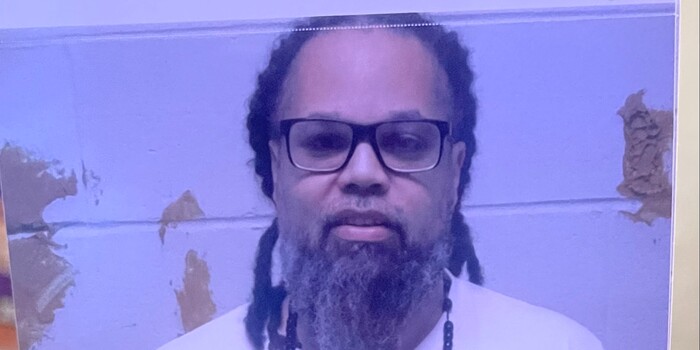
Featured image: Willie K. Wilkerson. Photo courtesy of supporters / via the “Free Willie K. Wilkerson” petition on The Petition Site.