By Unjustly Accused
Two days before Christmas in 1991, a fire tore through a small wood-frame house on West 11th Street in Corsicana, Texas. Inside were three little girls: two-year-old Amber Willingham and one-year-old twins Karmen and Kameron. None of them survived.
Their father, Cameron Todd Willingham, escaped with minor burns. Within weeks, fire investigators concluded the blaze had been set deliberately, using a liquid accelerant poured across the floor. Willingham was charged with capital murder, convicted in August 1992, and executed by lethal injection on February 17, 2004. He maintained his innocence to the end.
Since then, at least nine nationally recognized fire scientists, including one hired by the State of Texas, have reviewed the evidence and concluded that the arson findings were not supported by science.
The children’s mother, Stacy Kuykendall, has said she believes Willingham was guilty. Prosecutors have stood by the verdict. This publication does not claim to know what happened inside that house. But the question of whether the forensic case could support a conviction, let alone an execution, deserves a clear answer.
Case at a Glance
- Victims: Amber Louise Willingham, 2; Karmen Diane and Kameron Marie Willingham, 1
- Location: Corsicana, Navarro County, Texas
- Date of fire: December 23, 1991
- Accused: Cameron Todd Willingham, 23, their father
- Conviction: Capital murder, August 1992; death sentence
- Executed: February 17, 2004
- Key forensic evidence: “Pour patterns,” multiple points of origin, “crazed” glass, charring beneath a door threshold, and a positive accelerant test near the front door
- Other evidence: A jailhouse informant who later recanted and then wavered; witness accounts of Willingham’s behavior; inconsistencies in his own statements
- Post-execution review: Texas Forensic Science Commission inquiry (2009–2011)
How Arson Was Determined in 1991
At trial, Deputy State Fire Marshal Manuel Vasquez testified that the fire had three points of origin and was “intentionally set by human hands.” His conclusion relied on indicators that, at the time, many investigators were trained to treat as signs of arson:
- Puddle-shaped burn patterns on the floor, read as evidence of poured liquid
- Multiple points of origin, read as evidence of separately lit fires
- Crazed glass (spiderweb cracking), read as a sign of rapid, hot, accelerant-fed burning
- Charring under an aluminum door threshold, read as liquid running under it
- Burned floors and low burns, read as evidence the fire started low with fuel
A sample from near the front door tested positive for mineral spirits, a component of charcoal lighter fluid.
What Fire Science Learned
In the years around Willingham’s trial, fire science was being transformed. The National Fire Protection Association published its guide for fire investigations, NFPA 921, in 1992, the year of his trial. Controlled experiments, including a 1990 test fire in Jacksonville, Florida, showed that many classic “arson indicators” are produced naturally when a room reaches flashover, the moment when heat causes every combustible surface to ignite at once.
After flashover:
- Floors burn, often in irregular patches that resemble pour patterns.
- Multiple areas ignite simultaneously, mimicking multiple origins.
- Glass crazes when cooled rapidly by firefighters’ water, not from the speed of the fire.
- Burning under thresholds occurs from intense radiant heat and falling debris.
In plain terms, the signs the investigators read as proof of a crime are the same signs an accidental fire can leave once a room is fully involved.
Why This Raises Red Flags
The Hurst report, before the execution
In February 2004, fire scientist Gerald Hurst reviewed the evidence and concluded there was “no evidence of arson.” He said: “The whole case was based on the purest form of junk science. There was no item of evidence that indicated arson.”
On the one positive chemical test, Hurst noted that photographs showed a charcoal grill on the front porch, and suggested lighter fluid could have reached the threshold during the fire. The City of Corsicana later disputed that theory, citing the slope of the porch.
Hurst’s report was sent to Governor Rick Perry’s office and the Board of Pardons and Paroles before the execution. Neither granted relief.
The state’s own expert, after the execution
In 2009, the Texas Forensic Science Commission hired fire scientist Dr. Craig Beyler to review the case. His report concluded that “a finding of arson could not be sustained.” He described the fire marshal’s methods as “hardly consistent with a scientific mind-set and is more characteristic of mystics or psychics.”
A Chicago Tribune investigation summarized: nine of the nation’s top fire scientists had reviewed the case, and “All concluded that the original investigators relied on outdated theories and folklore to justify the determination of arson.”
The informant
Jailhouse informant Johnny Webb testified that Willingham confessed. Webb later told reporters he might have been mistaken, filed and then withdrew a recantation, and refused to confirm or deny his recantation at a later State Bar proceeding. In 2017, a jury in that proceeding rejected allegations that prosecutor John Jackson concealed a deal with Webb.
The Other Side of the Record
Fairness requires acknowledging what prosecutors, the City of Corsicana, and the children’s mother point to:
- Willingham gave shifting accounts of how he escaped and whether he tried to reach the children.
- Prosecutors argued his burns were superficial and that he did not appear to have inhaled significant smoke.
- Jurors later cited his statements about cologne having been poured in the house.
- Stacy Kuykendall has said that, in a final prison visit, he admitted the crime. In 2010 she said, “That is the closest to justice that my daughters will ever get.”
These points belong in any honest account. But none of them is fire science. The question the Forensic Science Commission confronted was whether the forensic basis for calling this fire an arson, the foundation of the capital charge, was valid.
A Commission Disrupted
In September 2009, two days before the Commission was to discuss Beyler’s findings, Governor Perry replaced its chair and two other members. The new chair was John Bradley, the Williamson County District Attorney who had spent six years opposing the DNA testing that later freed Michael Morton . The meeting was canceled.
In July 2010, a Commission panel acknowledged that investigators had used “flawed science,” but found insufficient evidence that they were negligent or committed misconduct, judging them by the standards of their time. The Commission did not rule on whether Willingham was guilty. It recommended improved training and standards for fire investigators, and Texas later began reviewing other arson convictions.
Beyler’s review also examined the case of Ernest Ray Willis, sentenced to death for a 1986 West Texas fire based on similar indicators. Willis was freed in 2004, months after Willingham’s execution.
The Spradlin Parallel: Interpreting a Scene Before the Lab Speaks
The Willingham case is about fire, not DNA. But its central failure, reading a narrative into physical features without testing whether innocent explanations fit equally well, appears in other cases.
In A Crime Scene Released, Then Rebuilt, we reported that investigators in the Amber Spradlin case identified blood in a kitchen sink and a laundry sink, findings that became central to allegations of a cleanup, before DNA results from those samples were available.
Michael McKinney is presumed innocent, and that case is unresolved. But the Willingham record shows why interpretation must wait for science, and why “consistent with” a crime is not the same as “inconsistent with” anything else.
Key Questions and Systemic Issues
- Junk-science relief: Texas created a legal path in 2013 to challenge convictions based on discredited science. How should that apply to cases like Willingham’s, where the defendant has been executed?
- Independence of forensic oversight: Should forensic commissions be insulated from political appointment changes mid-investigation?
- Expert training: How many investigators still rely on indicators that research has discredited?
- Informant testimony: Should uncorroborated jailhouse confessions ever support a capital case?
What Comes Next
The Willingham case has no legal resolution left to reach. In 2010, a Texas judge’s attempt to hold a posthumous inquiry was halted on appeal. The question of what caused the fire may never be answered with certainty.
Three little girls died in that house. Their memory is not served by a conviction that cannot withstand scientific scrutiny, any more than it would be served by declaring an innocent man guilty.
Why This Case Matters
- Fire science changed, and the case did not change with it.
- Flashover mimics arson. Classic indicators are not reliable proof of a set fire.
- Warnings arrived before the execution and were not acted upon.
- The state’s own expert found the arson finding could not be sustained.
- Oversight was disrupted at the moment it mattered most.
- Executions are irreversible. Scientific error cannot be corrected afterward.
- Victims deserve certainty, and the children’s family was left with a contested record instead.
Did Texas execute an innocent man? This publication cannot answer that. What the record does show is that Texas executed a man on the strength of fire science that its own expert later said could not be sustained. Forensic certainty in the courtroom is not the same as scientific truth.
Next week, we close this series in Houston, where a crime lab told a jury a DNA match was 1 in 694,000 when the real figure was closer to 1 in 8: Josiah Sutton.
We will continue to follow capital cases where forensic certainty is in doubt. If you have information about a potential wrongful prosecution, use our story submission instructions; the ordinary web form does not guarantee anonymity.
Sources
- Innocence Project: Myths and Facts about the Willingham Case
- Craig Beyler report for the Texas Forensic Science Commission (Aug. 2009) [PDF]
- Texas Forensic Science Commission final report on Willingham/Willis arson investigations [PDF]
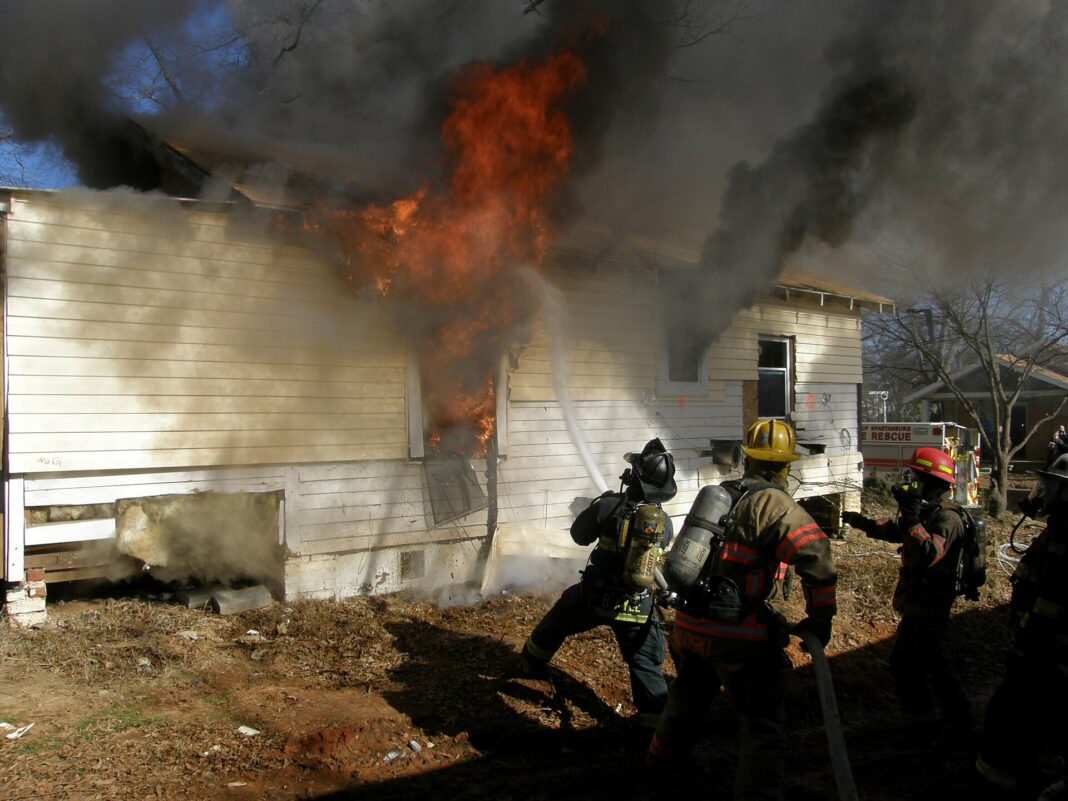
Featured image: NIST flashover research test burn. Photo: NIST (public domain).