By Unjustly Accused
On June 13, 1996, 18-year-old Angie Dodge was found dead in her apartment in Idaho Falls, Idaho. She had been raped and stabbed. Her mother, Carol Dodge, would spend the next 23 years fighting for the truth about who killed her daughter.
In 1998, a jury told her it had the answer. Christopher Tapp, then 21, was convicted of rape and first-degree murder on the strength of his own confession.
But there was a problem the jury had heard about and set aside: before trial, the state’s own DNA testing had excluded Tapp as the source of the semen left by the man who raped Angie Dodge.
It would take two decades, Carol Dodge’s own review of hours of interrogation tape, and the first use of genetic genealogy in an American exoneration to prove what the DNA had said from the start.
Case at a Glance
- Victim: Angie Dodge, 18
- Location: Idaho Falls, Bonneville County, Idaho
- Date: June 13, 1996
- Accused: Christopher Tapp, 20 at arrest
- Conviction: First-degree murder and rape, 1998
- Key evidence at trial: Tapp’s statements after repeated interrogations and polygraph examinations
- DNA before trial: Excluded Tapp as the source of the semen
- Released: 2017, after the rape conviction was vacated and the murder sentence reduced to time served
- Exonerated: July 17, 2019
- Actual perpetrator: Brian Leigh Dripps Sr., who had lived across the street; pleaded guilty in February 2021 and was sentenced in June 2021 to 20 years to life
How a Confession Was Built
Investigators first focused on another young man, Ben Hobbs, who had been arrested on an unrelated charge. Tapp, a friend of Hobbs, was brought in for questioning in early 1997.
Over a series of interrogations and polygraph sessions, Tapp’s account changed repeatedly. He began by denying any knowledge, then placed himself near the apartment, then inside it, then as a participant. Each version moved closer to the details investigators already knew.
When the DNA came back and did not match Hobbs or Tapp, the theory adjusted: a third, unidentified man must have been the rapist, while Tapp and Hobbs held the victim. Hobbs was never tried for the killing.
In plain terms, when the science excluded the suspect, the story changed to keep him in it.
What Carol Dodge Saw
Years after the conviction, Carol Dodge watched the interrogation recordings herself. She told The New York Times that what she saw was not what she had imagined when she heard there had been a confession:
“He would ask him a question, and he would answer it for him.”
She became one of Tapp’s most important allies.
Why This Raises Red Flags
- DNA exclusion before trial. The physical evidence of the rapist did not belong to the man on trial.
- Contamination of the confession. Details known to police were introduced during questioning, then repeated back.
- Polygraph pressure. Repeated polygraph sessions were used as leverage, despite the test’s well-documented unreliability.
- Theory expansion. An unknown third man was added to the narrative rather than reconsidering the suspect.
- Judicial resistance. In 2012, a judge denied additional testing, writing that “while DNA testing may be relevant in identifying one of the assailants, such does not make it more probable that Tapp is innocent.”
That last line captures the logic that kept Tapp in prison: once a confession exists, exculpatory science is treated as a detail rather than a contradiction.
The Science of False Confessions
Research on documented exonerations shows that false confessions are a significant factor in DNA exonerations, especially among young suspects. Risk factors present in the Tapp case include:
- Age. Tapp was 20 at arrest.
- Lengthy, repeated questioning over multiple sessions.
- Polygraph “failures” presented as proof of lying.
- Feeding of non-public details, which then make the confession appear credible.
- Promises or implied leniency, including suggestions that cooperation would help.
Confessions are powerful because jurors find it almost impossible to believe an innocent person would admit to murder. That is precisely why the process that produces them must be recorded, scrutinized, and corroborated.
A Cautionary Detour: The Wrong Paternal Line
Before genetic genealogy cleared Tapp, the search for the true source of the DNA produced another innocent suspect.
In 2014, Idaho Falls police ran the crime-scene Y-chromosome profile against a genealogy database of Y-STR profiles. It produced a near match, 34 of 35 markers, to an older man named Michael Usry Sr. Investigators turned to his son, Michael Usry Jr., a New Orleans filmmaker, in part because of the subject matter of his short films. He was questioned and gave a DNA sample. It did not match.
In plain terms, a Y-STR profile points to a family line, not a person, and treating a lineage match as a lead can put the wrong relative under suspicion.
How the Truth Finally Emerged
In 2017, with mounting evidence of innocence, prosecutors agreed to vacate the rape conviction and reduce Tapp’s murder sentence to time served. He walked out of prison, still a convicted murderer.
Carol Dodge pushed for genetic genealogy. Working with Parabon NanoLabs, genetic genealogist CeCe Moore built a family tree from the degraded crime-scene profile and narrowed the candidates to Brian Leigh Dripps Sr., who had lived across the street from Angie and had been briefly questioned early in the investigation.
Police collected a cigarette butt Dripps discarded. It matched the semen and hair left at the scene. Dripps was arrested on May 15, 2019, confessed during a roughly five-hour interview, and said he acted alone and did not know Tapp.
On July 17, 2019, Judge Alan Stephens vacated Tapp’s murder conviction:
“As far as the court is concerned, you are cleared of the charges you have been living under for the past 20-plus years.”
Tapp told the court: “I’ve wasted 20 years of my life for something I never did.”
Timeline: Twenty-Three Years to the Truth
- June 13, 1996: Angie Dodge is raped and murdered in her Idaho Falls apartment.
- January 1997: After a series of interrogations and polygraph examinations, Christopher Tapp is arrested.
- Before trial: State DNA testing excludes Tapp as the source of the semen.
- 1998: Tapp is convicted of rape and first-degree murder.
- 2012: A judge denies additional testing; limited testing later that year again excludes Tapp.
- 2014: A Y-STR genealogy search produces a false lead to Michael Usry Jr., who is cleared.
- March 2017: Tapp’s rape conviction is vacated and his murder sentence reduced to time served. He is released.
- May 15, 2019: Brian Leigh Dripps Sr. is arrested after genetic genealogy and a discarded cigarette butt link him to the crime scene DNA.
- July 17, 2019: Tapp’s murder conviction is vacated.
- 2021: Dripps pleads guilty and is sentenced to 20 years to life.
The man whose DNA was at the scene lived across the street for the entire span of this timeline.
The Spradlin Parallel: When the Theory Comes First
In the investigation into Amber Spradlin’s death, our reporting in A Crime Scene Released, Then Rebuilt found that charges were brought before DNA results from key blood samples were available. In Secondary DNA Transfer and the McKinney Case, we explained that the Y-STR trace reported in the case cannot identify an individual and is shared across male relatives.
Michael McKinney’s case is unresolved and he is presumed innocent. The Tapp case does not tell us what happened to Amber Spradlin. It shows what happens when an investigation decides first and tests later, and why a lineage-level Y-STR result must never be mistaken for identification.
It also shows something else: Carol Dodge wanted justice for her daughter, and she understood that justice required the right person. Justice for any victim depends on reliable evidence.
Key Questions and Systemic Issues
- Recording interrogations: Should every custodial interrogation be recorded from start to finish?
- Exclusionary DNA: Should a prosecution proceed when the state’s own DNA excludes the defendant from the central biological evidence?
- Polygraph misuse: Why are inadmissible tests still used to extract confessions?
- Genealogy safeguards: What rules should govern lineage searches to avoid targeting innocent relatives like Michael Usry Jr.?
What Comes Next
Brian Dripps pleaded guilty in 2021 and was sentenced to 20 years to life. Christopher Tapp has spoken publicly about rebuilding his life and about the bond he formed with Carol Dodge, who has continued to advocate for the use of genetic genealogy to solve cases and correct errors.
Why This Case Matters
- DNA excluded him, and he was convicted anyway.
- Confessions can be manufactured through pressure, polygraphs, and fed details.
- Y-STR points to families, not individuals, as the Usry episode shows.
- The real perpetrator lived across the street and was questioned early.
- A victim’s mother became a voice for the accused because she wanted the truth.
- Genetic genealogy can exonerate, not only convict, when it is used carefully.
Christopher Tapp’s conviction was not built on false science. It was built on a confession that science contradicted, and a system that chose the confession. Confidence is not the same as certainty.
Next week, we turn to Mississippi, where two men lost three decades between them to a forensic dentist’s certainty: Kennedy Brewer and Levon Brooks.
We will continue to follow cases where theory has outpaced evidence. If you have information about a potential wrongful prosecution, use our story submission instructions; the ordinary web form does not guarantee anonymity.
Sources
- Innocence Project: Christopher Tapp
- National Registry of Exonerations: Christopher Tapp
- Innocence Project: DNA identifies perpetrator; Tapp cleared
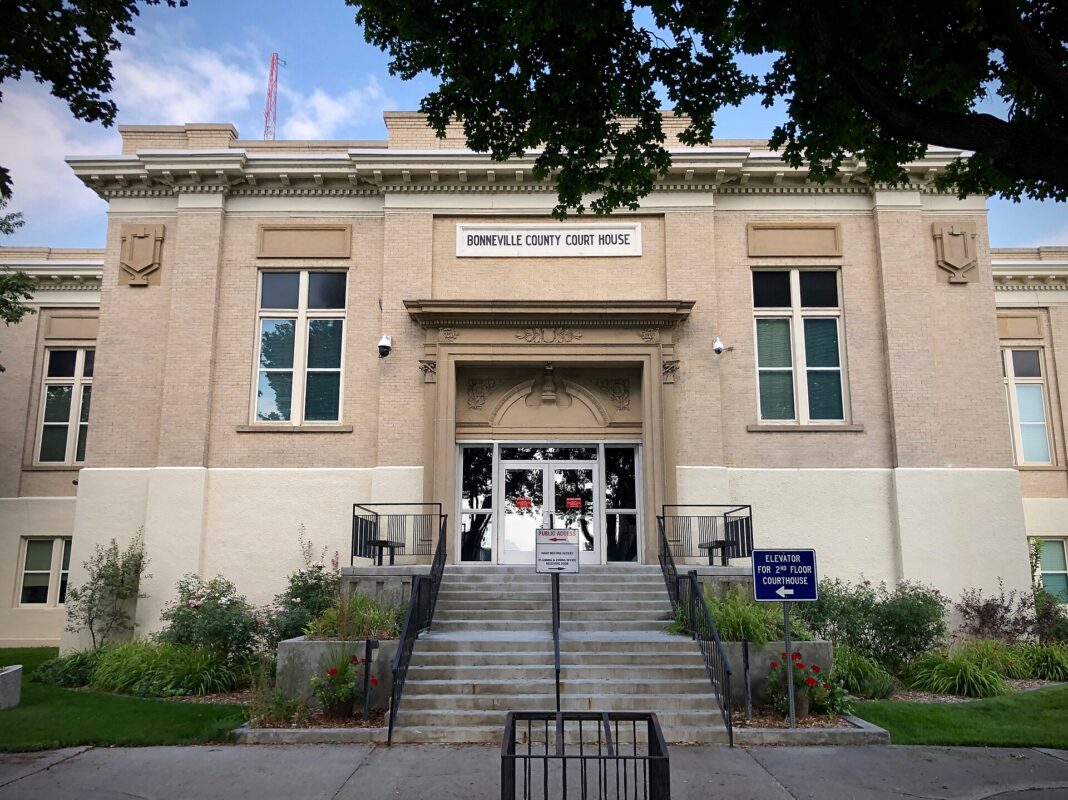
Featured image: Bonneville County Courthouse, Idaho Falls. Photo: Steven Pavlov / Wikimedia Commons (CC BY-SA 4.0).