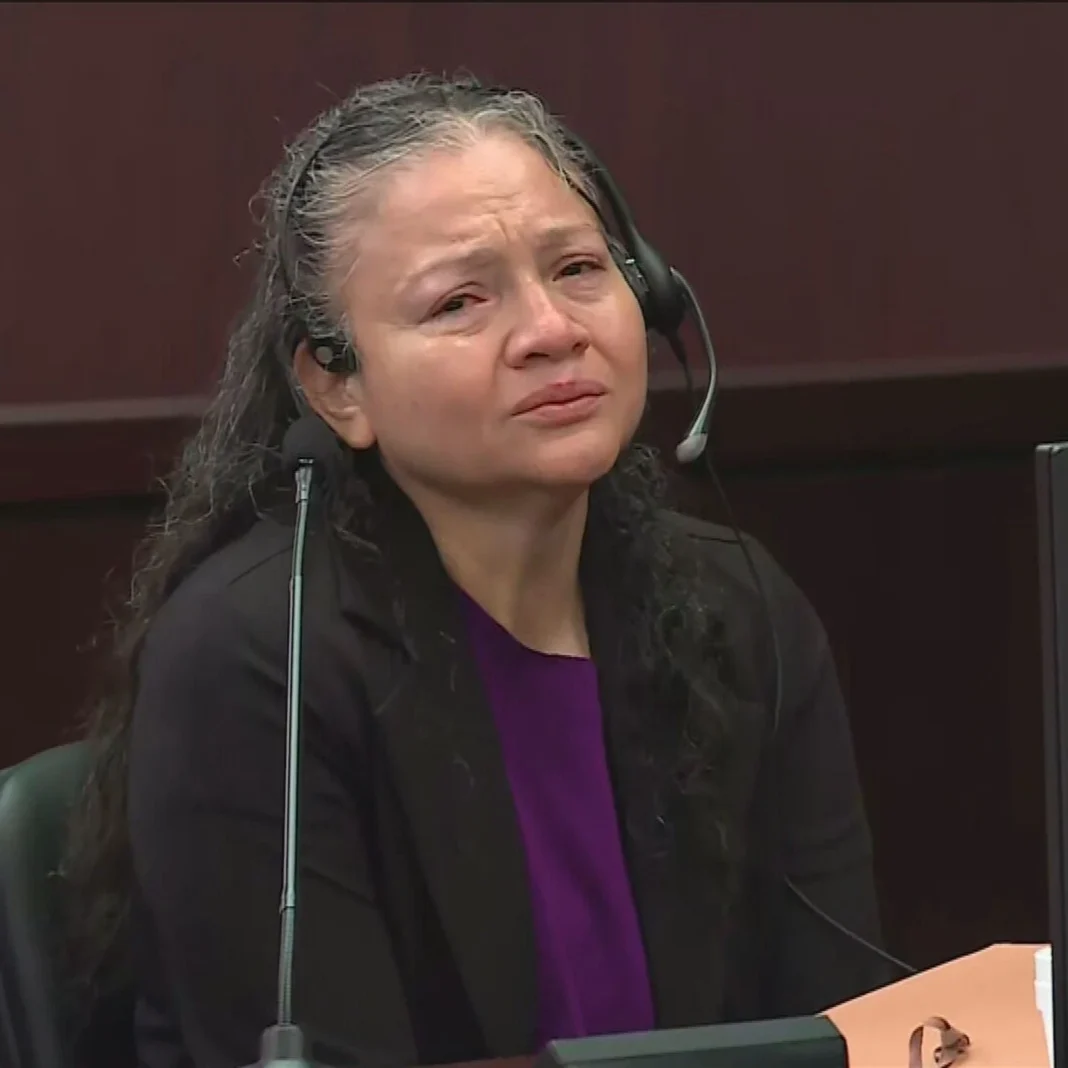
Dell Crawford was 52 years old when the cell door closed behind him. He was 69 when it opened again.
In between, the technology that should have cleared him in the first place caught up with what he had been saying all along.
What Happened in 2007
Tatanisha “Joy” Williams was 34 years old when she was killed in her Detroit home on September 10, 2007. She had two young children inside the house at the time. The cause of death, according to the Wayne County Medical Examiner, was blunt force trauma to the head. She had defensive wounds on the fingers of both hands.
Dell Crawford was her landlord. He was also her friend. When he could not reach her by phone that day, he drove over. A key had snapped off in her front door, so he asked a friend with tools to help him get inside. The two of them found her body. They found the children.
Crawford called 911. He took the kids to their grandmother’s house. He talked to the officers who arrived.
Three years later, in 2010, a Wayne County jury would convict him of her murder.
The Case That Should Not Have Made It to a Jury
There was no physical evidence connecting Dell Crawford to the killing. None at all. What the prosecution had was one witness, and that witness’s story moved.
It moved during the investigation. It moved at trial. By the time the case went to a jury, the only thing tying Crawford to the death of Tatanisha Williams was an account that had told itself differently more than once.
The jury acquitted him of first-degree murder. They convicted him of second-degree. He was sentenced to between 20 years 10 months and 45 years in prison.
A split verdict in a case without physical evidence is the kind of thing you only really understand in retrospect. It is the sound of a jury that did not entirely believe the State’s case but could not bring itself to release the only person they had been handed.
The DNA Result Nobody Pushed Back On
Here is the part that matters.
The Wayne County Medical Examiner’s office had collected scrapings from underneath Williams’s fingernails. With defensive wounds on both hands, that material had a reasonable chance of containing the assailant’s DNA.
The State’s lab tested it. The result, in 2007, came back: no male DNA detected.
In a different kind of case, that finding would have stopped a prosecution in its tracks. A woman fights off her attacker, claws at him with both hands, and the lab cannot find a single male contributor under her nails? That is a question, not an answer. It is a finding that points the investigation somewhere other than where it has been pointed.
Instead, it was treated as nothing. The prosecution moved forward on the witness. The jury was never invited to wonder why the most obvious source of physical evidence in the case had come back silent.
The silence was not the truth. The silence was the limit of what 2007 forensic technology could pull off a fingernail swab.
What Modern Testing Found
In October 2024, the Cooley Law School Innocence Project, working with the Wayne County Conviction Integrity Unit, sent the preserved fingernail evidence to a private laboratory.
The new analysis found a mixture of DNA from at least two unknown males.
Dell Crawford was excluded as a contributor.
The DNA had been there the whole time. The 2007 testing simply could not recover it.
The Road Back
The Cooley Innocence Project is the only post-conviction DNA innocence organization in Michigan. It screens thousands of cases. It has produced ten exonerations in 25 years of operation. Dell Crawford is the tenth.
The reinvestigation took roughly six years from the time Cooley took the case to the day Crawford walked out of the Parnall Correctional Facility in Jackson.
On March 24, 2026, Wayne County Circuit Judge Tracy Green vacated the conviction and dismissed the charge. Crawford participated in the hearing by video link from prison. Judge Green addressed him directly.
“Your conviction was not the only tragedy here,” she said. “There is perhaps someone out there who has gotten away with the murder of Miss Williams, and that is almost as disturbing as the amount of time you have spent in prison as an innocent man.”
He was released that afternoon.
What This Case Is Really About
There is a familiar way that DNA evidence shows up in wrongful conviction stories. A lab tests something. The lab says it matches the defendant. Years later, a different lab tests the same thing and says no, it does not.
That is not what happened here. The Crawford case is a quieter version of the same problem.
In 2007, the lab did not find male DNA where any reasonable observer would have expected to find it. Prosecutors had a choice about what to do with that. They could have treated it as a hole in their theory. They could have looked harder for someone else. They could have at least made the absence of DNA part of the conversation at trial.
They did none of those things. They proceeded on a witness. They got a conviction. A man went to prison for 17 years.
This is what faulty DNA evidence sometimes looks like. Not a mistaken match. A negative result that the State should have treated as a problem and instead treated as a green light.
A Few Things Worth Naming
A man behaved the way an innocent person behaves. Crawford was the one who called 911. He moved the children out of the house and to a relative. He did not flee, did not lawyer up at the door, did not refuse to talk to police. None of it counted for anything.
The witness was the case. When the only thing standing between a person and a life sentence is one person’s word, and that word keeps changing, the system is supposed to push back hard. In Crawford’s case, it did not push back at all.
The fingernail evidence survived. This is not a small thing. Most wrongful convictions cannot be undone because the physical evidence is gone. Lost, destroyed, never properly stored. Michigan kept the swabs. Without that, Dell Crawford would still be in Jackson.
The real killer’s DNA is now sitting in a file. Two unknown male profiles, pulled from under the fingernails of a woman who fought back. Whether law enforcement runs those profiles against the relevant databases, and what they do if they find a hit, is the next chapter of this story.
Where Things Stand Now
Crawford is eligible to seek compensation under Michigan’s wrongful conviction statute. The charge was dismissed without prejudice, which means it could in theory be refiled, although with DNA actively excluding him and pointing to other contributors, that outcome is unlikely.
He is 69 years old. He spent the years between 52 and 69 inside a Michigan prison for a crime the science now says he did not commit. Reentry support is being coordinated by the Team Wellness Center in Detroit. His attorneys, Niquole Caringi and Jessa Webber, have described him as quietly persistent through the years of his appeals. Caringi said he is intelligent, entrepreneurial, and ready to rebuild.
The Wayne County Prosecutor’s Office, through Conviction Integrity Unit Director Valerie Newman, has said it is examining what went wrong in the Crawford case in order to apply the lessons going forward.
The killer of Tatanisha Williams is still unidentified.
Why It Matters
DNA evidence is not a verdict that comes back from a laboratory. It is a snapshot of what one lab, on one day, with one set of tools, was able to recover from one piece of evidence. The same swab can return “nothing” in 2007 and a usable mixed profile in 2024, because the technology changed and the question being asked changed with it.
Dell Crawford lost 17 years to the gap between those two readings of the same material. The lesson is not that DNA is unreliable. The lesson is that a negative DNA result is not a finding of innocence and it is not a finding of guilt either. It is an absence, and an absence has to be interpreted honestly. In 2007, in Detroit, it was not.
Somewhere, there is a person whose DNA was under Tatanisha Williams’s fingernails. That person has been free for almost two decades, while Dell Crawford was inside.
That is the real cost of treating the limits of a technology as if they were the limits of the truth.