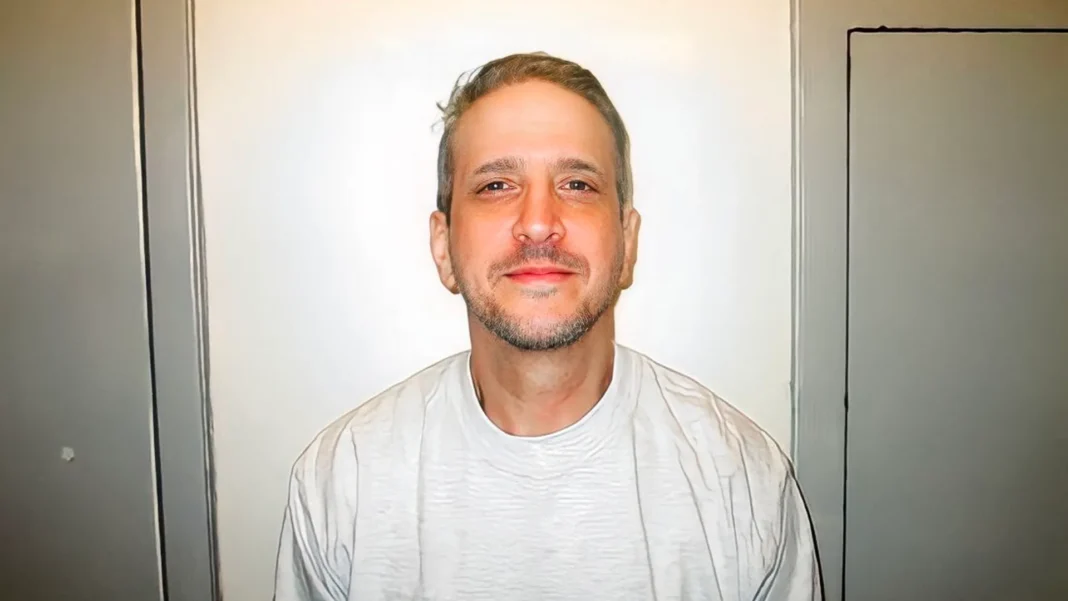
In a rare rebuke to Oklahoma’s justice system, the U.S. Supreme Court in February 2025 overturned the conviction of Richard Glossip, the death-row inmate long accused of orchestrating the 1997 murder of motel owner Barry Van Treese. The Court ruled that Glossip’s trial had been compromised by suppressed and mishandled evidence concerning the state’s key witness, Justin Sneed, and ordered a new trial.
The decision marked the culmination of nearly three decades of controversy surrounding one of America’s most debated capital cases—a case in which even Oklahoma’s own attorney general ultimately sided with the defense.
A Case That Refused to End
Glossip was twice convicted of first-degree murder for allegedly hiring Sneed, a young maintenance worker at the Best Budget Inn in Oklahoma City, to kill Van Treese in exchange for money. Sneed admitted to beating Van Treese to death with a baseball bat but claimed Glossip masterminded the plot.
Glossip has always maintained his innocence. His case became a lightning rod for critics of capital punishment, who saw it as an emblem of how unreliable testimony and incomplete disclosure can distort outcomes in death-penalty trials.
After years of appeals, executions delayed, and new legislative scrutiny, Oklahoma’s own attorney general’s office commissioned an independent review in 2023. That review unearthed previously undisclosed materials—handwritten notes, psychiatric references, and coaching indications that cast new doubt on the reliability of Sneed’s testimony.
The Newly Revealed Materials
The evidence that changed the case’s course came from within the state’s own files. Among the disclosures were:
-
Notes referencing lithium, suggesting Sneed was treated for a mood disorder, a fact never disclosed to the defense or jury.
-
Statements showing Sneed’s uncertainty about Glossip’s role during early police interviews, before prosecutors met with him.
-
Indications of prosecutorial coaching, including guidance on how to frame his testimony to align with the state’s theory.
These revelations, taken together, painted a troubling picture: the prosecution’s star witness may have been both unstable and influenced—and jurors never knew.
The Oklahoma attorney general, Gentner Drummond, concluded after reviewing the record that the conviction could not stand. His office confessed error, a nearly unprecedented move in a capital case.
Yet the Oklahoma Court of Criminal Appeals (OCCA) rejected the request for a new trial, insisting the evidence did not meet the state’s procedural standards for relief. That standoff between the state’s top prosecutor and its highest criminal court set the stage for Supreme Court intervention.
Why the Supreme Court Stepped In
In a 6–3 decision, the U.S. Supreme Court held that the OCCA’s refusal to grant relief was reviewable under federal law. The key jurisdictional question was whether the state ruling rested on “independent and adequate state grounds.” The majority found it did not—opening the door to federal consideration of Glossip’s due-process claims.
Central to the Court’s reasoning was the Napue doctrine, derived from Napue v. Illinois (1959), which prohibits the government from using false or misleading testimony—or allowing such testimony to go uncorrected—when it could affect the verdict.
The Court concluded that the suppressed materials relating to Sneed’s mental health, credibility, and inducements were precisely the type of evidence that federal due process requires to be disclosed. Taken together, these omissions “undermined confidence in the fairness and reliability of the death sentence.”
The Dissenting View
Three justices dissented, warning that the Court’s involvement blurred the line between federal and state judicial authority. They argued that the differences in Sneed’s statements were “immaterial and cumulative”, and that Oklahoma courts were better positioned to weigh the impact of the evidence.
Even so, the dissent acknowledged the seriousness of the allegations, noting that the record “raises significant questions about the credibility of the central witness” in a case where life or death hangs in the balance.
For all its procedural disagreements, the Court’s split underscores how capital cases amplify every error—and how the tension between finality and fairness plays out in the nation’s highest tribunal.
The Fragile Foundation of a Death Sentence
The Glossip case reveals the risks inherent in a prosecution built almost entirely around a single cooperating witness with a powerful incentive to shift blame. Sneed avoided the death penalty by testifying against Glossip. The newly surfaced materials suggest he may have shaped his account under pressure to preserve that deal.
Once the narrative hardened—that Glossip had paid Sneed to kill Van Treese—each subsequent stage of review grew less open to alternative interpretations. Appeals courts, bound by deference to juries and state procedures, focused more on finality than on reinvestigation.
That dynamic is not unique to Oklahoma. Across the country, wrongful conviction reviews show that suppressed evidence and uncorrected false testimony are leading contributors to capital case reversals. The Glossip ruling adds another data point to that pattern—and a warning.
Structural Factors That Distort Capital Justice
The Supreme Court’s majority opinion highlighted several systemic failings that can warp outcomes in death-penalty trials:
-
Dependence on a single, incentivized witness whose own fate depends on cooperation.
-
Incomplete or suppressed credibility records, especially about mental health or inducements.
-
Failure to correct misleading testimony, even when inconsistencies emerge during trial.
-
Post-conviction barriers, where procedural rules outweigh accuracy.
-
Institutional pressure to defend prior convictions despite emerging doubts.
Each factor compounds the risk that a death sentence may rest on a foundation of incomplete truth.
What a New Trial Means
The Court’s ruling does not exonerate Richard Glossip. Instead, it mandates that any future jury hear the full story—including the evidence the first two juries never saw.
That means jurors will learn about Sneed’s potential mental-health treatment, his conflicting accounts, and his interactions with prosecutors. They will also hear from new experts on witness reliability and investigative conduct.
For Glossip, who has come within hours of execution multiple times, the new trial represents both reprieve and reckoning—a final opportunity to test whether the state’s theory can withstand full transparency.
A Turning Point for Oklahoma’s Justice System
The case has already prompted wider consequences. The attorney general has initiated a review of evidence disclosure policies statewide, and legislators have reopened debate over the reliability of Oklahoma’s capital procedures, which have faced federal scrutiny in recent years.
Civil rights advocates view the Supreme Court’s decision as a watershed moment—proof that federal oversight remains a vital safeguard when state systems fail to self-correct.
For others, the ruling is a sobering reminder that even in capital prosecutions, truth can be fragmented, hidden, or forgotten, only to resurface decades later through persistence and transparency.
The Larger Question
Every wrongful-conviction case forces the justice system to confront an uncomfortable truth: that conviction and guilt are not synonymous, and that certainty can be built on fragile ground.
In Richard Glossip’s story, the fault lines run from the interrogation room to the appellate bench. Whether he is ultimately acquitted or reconvicted, the Supreme Court’s decision has already restored one essential element that was missing for years—the promise of a fair and fully informed trial.