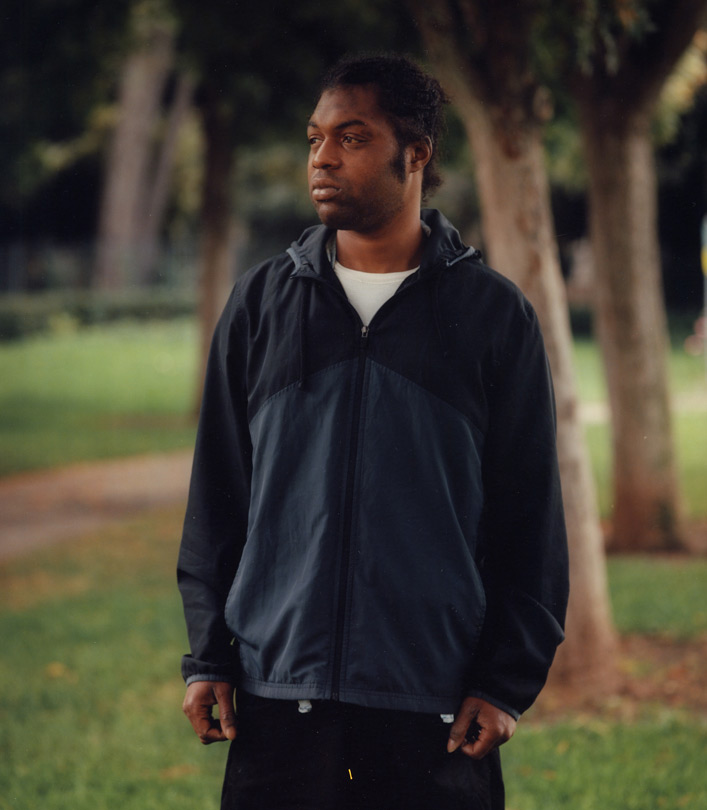
On paper, the case against Lukis Anderson looked airtight. His DNA was reported under the fingernails of Silicon Valley investor Raveesh Kumra, who died during a late-night home invasion on November 29, 2012. In Santa Clara County, where juries are conditioned to treat DNA as definitive, that single fact could have ended a life.
It was wrong.
The Anderson case exposes a convergence of problems that often remain hidden from public view: secondary DNA transfer, investigative anchoring, and a system that treats activity questions, how DNA arrived, as an afterthought. This is a reconstruction of how an innocent man’s genetic trace traveled from a San Jose sidewalk to a Monte Sereno mansion he never entered, and how routine safeguards failed until the last possible moment.
The crime and the early narrative
Shortly before midnight, multiple intruders entered Kumra’s Monte Sereno home. They tied and blindfolded him, assaulted and restrained his companion upstairs, ransacked the house, and fled. Responding paramedics declared Kumra dead at the scene. The medical examiner later attributed the cause to asphyxiation from the gagging tape.
Investigators collected latex gloves from a kitchen sink and mustache-print duct tape used to bind the victims. A county criminalist developed several profiles. Database searches hit on two Oakland men, DeAngelo Austin on the tape and Javier Garcia on washed gloves. A third hit came from the fingernail clippings. It identified Lukis Anderson.
With Anderson’s profile in hand, detectives built a theory. Although there were no phone records showing travel to Monte Sereno and no witness who placed him there, they noted an earlier burglary conviction and a prior jail overlap with an associate of Austin. The working hypothesis took shape. Anderson, a local with burglary history, had been recruited to help.
The alibi that should have stopped everything
Public defender Kelley Kulick obtained Anderson’s ambulance, hospital, and dispatch records, along with store reports. The timeline that emerged was precise.
7:54 p.m. A 7-Eleven clerk reported Anderson panhandling.
Around 8:15 p.m. to 10:45 p.m. Anderson, severely intoxicated, collapsed at S&S Market. Fire and ambulance personnel arrived and transported him.
10:45 p.m. to morning Hospital intake records show Anderson in a bed, monitored and detoxing.
Harinder Kumra told police the assailants were in the house between roughly 11:30 p.m. and 1:30 a.m. The alibi was not only solid, it was documented by first responders and hospital staff.
Yet a question remained. How did Anderson’s DNA get under the victim’s nails if Anderson never left the hospital bed during the relevant window
The overlooked vector
Detective Erin Lunsford eventually found the connective tissue. The same two paramedics who handled Anderson outside S&S Market also responded to the Kumra scene a few hours later. Somewhere in that chain, likely through a reused pulse oximeter, a gloved hand, a uniform sleeve, or another piece of equipment, Anderson’s genetic material hitchhiked from one patient to another.
That is secondary transfer in practice. It does not require negligence. It requires routine contact, shared equipment, and a technology sensitive enough to light up a handful of cells as if they were a confession.
What the science already said
By the time of this homicide, the literature had established several facts that should have informed the investigation.
Touch DNA is promiscuous. People shed tens of millions of skin cells a day, and ordinary speech distributes saliva laden with DNA. Foreign DNA frequently appears on hands, under nails, and on objects that the contributor never touched directly.
Increased sensitivity raises ambiguity. Modern kits can recover profiles from minute quantities. That strength magnifies the risk that innocently transferred DNA will be detected in a place where jurors expect offender DNA to be found.
The key question is not only whose DNA is present. The key question is how it arrived and how long it persisted. That is an activity question. It requires scene context and transfer data, not just a match report.
In this case, the lab made a source call. The narrative leap that followed, the assumption of a struggle because DNA was under nails, was an activity conclusion that demanded evidence the state did not have.
Human factors inside the investigation
Once the database matched Anderson to the fingernails, the investigation tilted toward confirmation.
The hit created narrative gravity. Facts that fit the theory, such as the old burglary and the jail overlap, were emphasized. Missing corroboration, such as travel data or witnesses, was discounted.
Interrogation messaging hardened the perception of infallibility. Statements to the effect that a DNA hit is never wrong functioned as a credibility shortcut, despite well known risks of transfer and contamination.
The search for a connective thread focused on the suspect’s history rather than neutral process links, such as first responder contact and equipment reuse across scenes.
None of this requires bad intent. It is enough to have an investigative culture that elevates DNA from evidence to verdict.
Systemic gaps that the case revealed
- Crime scene hygiene and EMS linkage
First responders routinely move between patients and scenes. Equipment like pulse oximeters and monitors may be reused within a shift. Unless those movements and reuses are logged and disclosed, defense teams cannot identify innocent vectors, and jurors do not hear about them. - Limited transfer research in the United States
Several European and Australian laboratories have built applied knowledge about transfer. Most American facilities do not study transfer regularly. Analysts are comfortable identifying a contributor, yet are discouraged from testifying about how DNA can move. That leaves juries with a match and little context. - Database growth without parallel safeguards
As databases expand, more people’s DNA becomes available to be detected through secondary transfer. Since over-policed communities are most represented, the risk of innocent implication is not evenly distributed. - Fragile defense capacity
Anderson survived because a public defender had the resources and instincts to chase ambulance rosters, hospital logs, and store witnesses. Many defendants do not get that level of workup, especially when a plea offer looms.
Aftermath and uneven accountability
Anderson’s charges were dismissed. He received no compensation for months spent in jail under the threat of the death penalty. The prosecutions of other defendants continued. Jurors convicted Garcia, Austin, and Marcellous Drummer, and transfer arguments did not prevail for them. Detective Lunsford received commendations and later a promotion. He now speaks openly about DNA’s mobility, a useful message that has yet to translate into standardized practice.
What should change
- Treat activity as a core forensic task
Require laboratories to provide activity-level assessments whenever DNA is central to the case. Analysts should lay out competing hypotheses, direct contact versus secondary transfer, and explain what the quantities, locations, and scene facts support. Use likelihood ratios and uncertainty ranges, not categorical statements. - Modernize first responder protocols
Adopt single-use or scene-specific covers for oximeters and monitor leads. Require glove changes between each patient and each scene. Maintain and disclose decontamination logs. If the same crew touches multiple people within a shift, that linkage must be memorialized and provided in discovery. - Build transfer literacy into charging decisions
Before an arrest that rests primarily on a DNA hit, supervisors should verify corroboration. If there is none, require documented exploration of transfer routes, including EMS involvement and shared equipment. - Fund transfer research and tie it to accreditation
Condition accreditation on demonstrated competence with transfer scenarios, proficiency testing for low-template mixtures, and published standard operating procedures that reflect current science. - Balance database policies with transparency
If collection expands, enact expungement pathways, retention limits, and audits that report false lead rates and known secondary transfer incidents. - Make discovery reflect the real chain of contact
Automatic disclosure should include EMS rosters, equipment logs, crime scene tool inventories, and lab contamination audits. The defense should not have to reconstruct a medical chain of custody to avert a wrongful conviction.
What this case says about certainty
The legal system rewards closure. DNA promises it. The Anderson case shows that certainty requires more than a match. It requires proof of the path, not just proof of the profile. In a world where a routine oximeter reading can move genetic material from one person to another, jurors need more than a contributor call. They need the story of how that DNA could have traveled, how long it could have lasted, and what competing explanations remain on the table.
Lukis Anderson walked out of jail with no restitution and a grim lesson. DNA is powerful, but it is not a verdict. Until investigators, laboratories, and courts insist on activity-level answers, more people will confront the same impossible question that haunted him. How did my DNA commit a crime I did not?